
The Race to Wismar: Canadian Paras at the Baltic

In the closing days of the Second World War, the 1st Canadian Parachute Battalion pushed toward the Baltic with the British 6th Airborne Division. Its destination was Wismar, a German port where the advance of the Western Allies would meet the Red Army.
The Canadians had already fought in Normandy, the Ardennes and the Rhine crossing. Their final drive would take them through a collapsing Germany, past soldiers seeking surrender and civilians moving west.

Across the Elbe
The 15th Scottish Division began its assault across the Elbe on April 29, 1945. The Canadian paratroopers crossed the following afternoon, moving through the bridgehead toward the northeast.
This was a ground advance by airborne troops. Trucks and supporting armor carried the force forward as German resistance broke down. The roads were crowded, and taking prisoners could not be allowed to bring the column to a halt.
The drive to Wismar
On May 2, the battalion moved through Wittenburg toward the Baltic. German troops encountered along the route surrendered, while refugees and released Allied prisoners added to the movement west.
By that evening, the Canadians held Wismar. Companies covered the approaches and established positions in the town. For men who had spent months fighting across Europe, the end of the campaign was suddenly close.
Meeting the Red Army
A Soviet officer reached the Canadian positions during the night of May 2–3. The encounter marked the meeting of armies that had approached Germany from opposite directions.
The photographs of Canadian and Soviet soldiers together capture that moment. They show a wartime alliance reaching its military objective even as questions about occupation and the postwar settlement were coming into focus.

Where Denmark fits
The wider Allied advance to the Baltic also cut the route between German forces farther south and those in Denmark. British forces entered Lübeck on May 2, while the airborne division reached Wismar farther east.
Hamburg surrendered on May 3. On May 4, Montgomery accepted the surrender of German forces in the Netherlands, northwestern Germany and Denmark, effective the following morning.
That sequence gives the Canadian advance its wider context. Describing the battalion as having single-handedly “saved Denmark” goes beyond what the documented operations establish. Its achievement at Wismar stands on its own: a rapid final advance, the securing of a Baltic port and contact with Soviet forces.
A final mission
Wismar was a fitting endpoint for a battalion whose war had begun with a parachute descent into Normandy. Its last major movement showed the same qualities demanded of airborne soldiers throughout the campaign: speed, initiative and the ability to operate through uncertainty.
By the Baltic, the Canadians’ fighting journey across northwest Europe was drawing to a close. The photographs preserve a brief pause between the war they had fought and the peace that was still taking shape.
Sources and further reading
-

Airborne Ambition: The 173rd’s Combat Jump into Vietnam
Read MoreOn February 22, 1967, the 173rd jumped into Operation Junction City. Explore the soldiers, photographs, and legacy of that historic combat jump.
-

2026 Changes to the Airborne Community
Read MoreThe Army's airborne community just got smaller. Last October, more than 22,000 parachutist positions were reclassified, soldiers who wore jump wings and drew hazardous duty pay no longer do either. For anyone who's spent time in an airborne unit, that number hits hard. It's the equivalent of cutting six entire...
-

“Transforming in Contact”: Army’s New Changes in Organization and Equipment
Read MoreIn the dynamic world of modern warfare, no military force can afford to remain static. The rapid pace of technological advancement, evolving threats, and shifting battlefields demand constant adaptation. For the U.S. Army, the concept of “continuous transformation” is not merely a strategy but a necessity, especially for its airborne...
-
The Epic Journey of the 517 Parachute Regimental Combat Team
Read MoreThe origins of the 517th Parachute Regimental Combat Team (PRCT) trace back to the birth of the 17th Airborne Division on March 15, 1943. This division’s parachute forces included the 517th Parachute Infantry Regiment, the 460th Parachute Field Artillery Battalion, and Company C of the 139th Airborne Engineer Battalion. While...
-

From Origins to Excellence: The Early Days of Australian Paras and their Training School Today
Read MoreAt the onset of World War II, Australia's small Permanent Army and its militia lacked any capability for parachute operations. However, the early successes of German paratroopers, particularly at Fort Eben Emael in Belgium in 1940, highlighted the strategic value of airborne forces and spurred Australia to develop its own....
-
The Elusive Blue Air Assault Beret
Read MoreBlue Air Assault Berets: A Brief Chapter in Military History In the accounts of military tradition, berets have often stood out as symbols of honor and excellence, providing soldiers with an extra element of pride. They adorn soldiers' heads, signifying their commitment to a unique calling. While everyone in the...
-
Operation Dragoon: Allied Invasion of Southern France in 1944
Read MoreOperation Dragoon, originally codenamed Anvil, was the Allied invasion of Southern France that began on August 15, 1944. It was a critical complement to the D-Day landings in Normandy, aiming to open a second front and facilitate the liberation of France from Nazi occupation. This blog will provide details of...
-
Operation Musketeer: The Jump on the Suez Canal
Read MoreThe 1956 Suez Crisis, also known as the Second Arab-Israeli War, was a complex conflict involving multiple nations and interests. At its core, the crisis was a confrontation over control of the Suez Canal, a crucial waterway for global trade and oil transport. Operation Musketeer, a unique joint military operation...
-
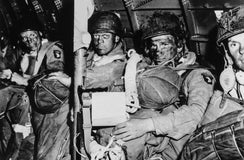
Reexamining D-Day Airborne Operations
Read MoreThe Stage is Set for the Most Pivotal Airborne in History As the grand strategy for Operation Overlord took shape, the Trident Conference in Washington in May 1943 became the crucible where its fate was forged. The flanks of Normandy's beaches emerged as the cornerstones of liberation, demanding control to...
-
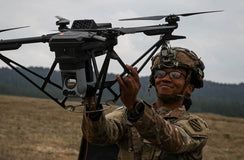
Unmanned Aerial Systems Will Become Integral to Airborne Operations
Read More"Attack your enemy where he is unprepared; appear where you are not expected." Sun Tzu Airborne Operations Have Changed Integrating Unmanned Aerial Systems (UAS) into airborne operations has not just reshaped tactical strategies and operational capabilities in modern warfare, but it has also provided a significant strategic advantage. This paradigm...
-
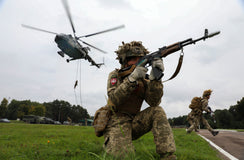
Ukraine’s Air Assault Forces – Always First!
Read MoreFrom Soviet Doctrine to Leading in the Frontline Upon the fall of the Soviet Union, several Airborne Forces of the Soviet Union were integrated into the Ukrainian Ground Forces under the name of the Ukrainian 1st Airmobile Division. For their first 20 years, they became the go-to division in Ukraine's...
-
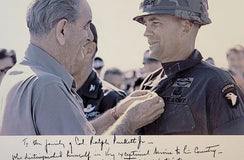
Colonel Ralph Puckett Jr.: A Tribute to Valor and Command
Read MoreColonel Ralph Puckett Jr., an exemplar of courage and command, departed this life at 97 years old, bequeathing a heritage of inspiration to countless warriors and citizens. His distinguished service record, adorned with acts of gallantry and altruism, traversed dual conflicts and a multitude of commendable deeds, meriting the top...
-
The 82nd Airborne Division Association – The Living Legacy of All-Americans
Read MoreThe 82nd Airborne Division Association – The Living Legacy of All-Americans We want to start out by stating that this is not a paid advertisement for the association nor did they entice us to write about them. As a paying member of the association ourselves, we are just a fan...
-
160th Special Operations Aviation Regiment - The Night Stalkers
Read MoreThey were born out of a doomed operation, but their role has become irreplaceable. Their brothers in arms count on them in the most difficult of times while they remain the enemy’s worst nightmare. Battle-proven, always resilient, and lethal, they are highly respected among all the services and have often...
-
Operation Hump: 173rd’s Legendary Operation in Vietnam
Read MoreSoldiers take cover in a crater during the Vietnam War (Courtesy Photo/U.S. Army) Operation Hump is a legendary operation conducted jointly by Australian and American Airborne forces in Vietnam. The Friendly composition consisted of the 1st Battalion, 503rd Infantry Regiment, 173rd Airborne Brigade, as well as a battalion from...
-
Wisdom from the Community: Top Five Pieces of Advice for New Paratroopers
Read MoreWisdom from the Community: Top Five Pieces of Advice for New Paratroopers Hear ye, hear ye! Young paratroopers, we believe you deserve some valuable advice because you are at a stage where you need it to shape your military career. Because we care, we reached out to our community to...


