
2026 Changes to the Airborne Community

The Army's airborne community just got smaller. Last October, more than 22,000 parachutist positions were reclassified, soldiers who wore jump wings and drew hazardous duty pay no longer do either. For anyone who's spent time in an airborne unit, that number hits hard. It's the equivalent of cutting six entire battalions from the jump roster. But here's the thing: this wasn't about the Army giving up on airborne operations. It was argued that this was about saving them.
After a 16-week study that concluded in 2024, Army leadership reached an uncomfortable conclusion: the airborne force structure had outgrown its mission. With 56,000 paid parachutist positions scattered across active duty, Guard, and Reserve, the Army was stretched too thin to keep paratroopers proficient. Soldiers were jumping less than three times a year, well below the four-jump minimum needed to stay current. Parachute riggers were running at 60-70% strength, spending all their time packing personnel chutes, leaving no capacity to train on cargo drops or resupply missions. Jumpmasters were turning over faster than units could replace them. Meanwhile, the Air Force couldn't provide enough C-130s and C-17s to support the training schedule, leaving tens of thousands of planned jumps on the cutting room floor every year.
Something had to give.
Smaller, Sharper, Ready

The restructure didn't gut the airborne community, it refocused it. The 82nd Airborne Division, the 173rd Airborne Brigade, the 11th Airborne Division in Alaska, the 75th Ranger Regiment, and Special Forces units remained fully jump-qualified. These are the units with real-world airborne missions, the ones that might actually kick out the back of an aircraft over hostile territory. For them, training opportunities are about to increase significantly. Instead of averaging three jumps a year, paratroopers in high-priority units will see that number climb to 12. That's monthly jump training—something we haven't seen consistently since the Cold War.
Some argue that the cuts came from places that, frankly, never needed jump status in the first place. Training commands, institutional staff positions, support brigades in the Reserve and Guard—units that exist to sustain the force, not to conduct forcible entry operations. Since 2002, the Army added more than 13,000 airborne billets without a corresponding increase in operational demand. Large-scale airborne assaults are rare. Panama in 1989 and the 173rd's jump into northern Iraq in 2003 are the exceptions, not the rule. Most deployments since then have seen airborne units moving by ground or by aircraft—but not by parachute.
So why keep paying soldiers to maintain jump status if they're never going to use it?
What This Means on the Ground
For the units that remain airborne, the changes are all upside down. More aircraft availability. More training days. Better access to jumpmaster schools. Parachute riggers can now train on heavy-equipment drops and aerial resupply—skills that matter in contested environments where ground logistics are choked off. Commanders will reclaim up to 9 training days per year that were previously burned on scheduling jump slots for soldiers who didn't operationally need them. That's time they can now spend on small-unit tactics, live-fire exercises, or integrating new tech like the drones that are reshaping modern warfare.
The financial side isn't trivial either. Cutting 22,000 jump positions saves over $40 million annually in hazardous duty pay alone, plus more than a million in aviation fuel costs. But soldiers who stayed in designated airborne roles didn't get shortchanged—their monthly jump pay went up from $150 to $200. Jumpmasters now get an additional $150 per month in special duty pay. The message is clear: if you're in a unit that actually jumps, the Army's investing in you.
For the soldiers who lost their jump status, though, this transition hasn't been easy. Some had been drawing that extra $150 a month for years. Others went through Airborne School specifically to serve in these units, and now they've been told the mission no longer requires it. It's not a reflection on them—it's a recognition that the Army overextended itself and needed to correct course. Still, that doesn't make it any less of a gut punch.
Innovation Where It Counts

While the airborne restructure focused on getting back to basics, the Army's also pushing hard on the modernization front. The XVIII Airborne Corps just opened the Lt. Gen. James M. Gavin Joint Innovation Outpost at Fort Bragg last month—a hub designed to bring defense contractors, academics, and soldiers together to solve problems in real time. The soft opening in December already resulted in a counter-drone solution being fast-tracked after a single demonstration. That's the kind of speed the Army hasn't operated at in decades.
Secretary of the Army Daniel Driscoll made his priorities clear at the AUSA annual conference: the Army has to innovate faster, acquire quicker, and stop waiting until Americans are dying to figure out what works. The Joint Innovation Outpost (JIOP) is the institutional answer to that challenge. It's where Dragon's Lair, the Army's version of Shark Tank, gives soldiers of any rank a platform to pitch solutions. It's where Scarlet Dragon exercises bring new tech directly into operational training to see what sticks.
The Hard Truth
Here's what no one wants to say out loud, but everyone's thinking: this restructure admits that the Army got it wrong. For more than 20 years, the service expanded airborne billets without asking whether those positions actually contributed to readiness. It felt good to have more jump-qualified soldiers, but feeling good doesn't win wars. The Ukraine conflict has shown what modern combat looks like: drones everywhere, long-range fires dominating, and infantry fighting dispersed across terrain where mass formations get shredded.
Airborne operations still have a place in that fight—rapid insertion, seizing key terrain, denying the enemy freedom of movement. But only if paratroopers are trained to a standard that makes them effective when they hit the ground. You can't do that when soldiers are barely staying current on their jumps, and support systems are stretched to the breaking point.
The Army bet that a smaller, better-trained airborne force is more valuable than a bloated one that looks impressive on paper but can't deliver when it counts. It's the right call. But it's also a hard one, and it's going to sting for many soldiers who've spent their careers in units that just lost their airborne designation.
What Comes Next
The changes took effect last October. Soldiers either saw their jump pay go up or disappear entirely, depending on where they're assigned. Units that lost airborne status didn't stop being important—they just stopped jumping. The Guard and Reserve will still send soldiers through Airborne School to maintain a pipeline of qualified personnel for when the active-duty units need reinforcements. The 82nd, the 173rd, the Rangers—they're still who they've always been, just better resourced and more ready.
The JIOP will keep pushing innovation. Units will keep refining their transformation in contact. The airborne community will keep doing what it's done since Normandy—adapting, evolving, and proving that when the mission requires it, America's paratroopers are still the ones you want going in first.
Smaller? Yes. Sharper? Absolutely. Ready? That's the bet the Army made, and it's one worth taking.
-

“Transforming in Contact”: Army’s New Changes in Organization and Equipment
Read MoreIn the dynamic world of modern warfare, no military force can afford to remain static. The rapid pace of technological advancement, evolving threats, and shifting battlefields demand constant adaptation. For the U.S. Army, the concept of “continuous transformation” is not merely a strategy but a necessity, especially for its airborne...
-
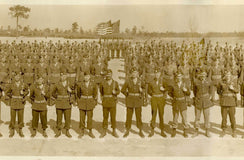
The Epic Journey of the 517 Parachute Regimental Combat Team
Read MoreThe origins of the 517th Parachute Regimental Combat Team (PRCT) trace back to the birth of the 17th Airborne Division on March 15, 1943. This division’s parachute forces included the 517th Parachute Infantry Regiment, the 460th Parachute Field Artillery Battalion, and Company C of the 139th Airborne Engineer Battalion. While...
-

From Origins to Excellence: The Early Days of Australian Paras and their Training School Today
Read MoreAt the onset of World War II, Australia's small Permanent Army and its militia lacked any capability for parachute operations. However, the early successes of German paratroopers, particularly at Fort Eben Emael in Belgium in 1940, highlighted the strategic value of airborne forces and spurred Australia to develop its own....
-
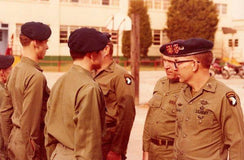
The Elusive Blue Air Assault Beret
Read MoreBlue Air Assault Berets: A Brief Chapter in Military History In the accounts of military tradition, berets have often stood out as symbols of honor and excellence, providing soldiers with an extra element of pride. They adorn soldiers' heads, signifying their commitment to a unique calling. While everyone in the...
-
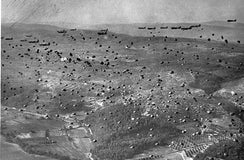
Operation Dragoon: Allied Invasion of Southern France in 1944
Read MoreOperation Dragoon, originally codenamed Anvil, was the Allied invasion of Southern France that began on August 15, 1944. It was a critical complement to the D-Day landings in Normandy, aiming to open a second front and facilitate the liberation of France from Nazi occupation. This blog will provide details of...
-
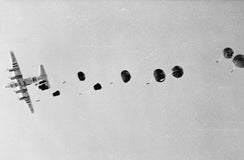
Operation Musketeer: The Jump on the Suez Canal
Read MoreThe 1956 Suez Crisis, also known as the Second Arab-Israeli War, was a complex conflict involving multiple nations and interests. At its core, the crisis was a confrontation over control of the Suez Canal, a crucial waterway for global trade and oil transport. Operation Musketeer, a unique joint military operation...
-
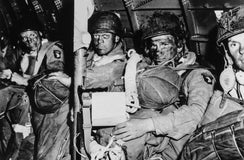
Reexamining D-Day Airborne Operations
Read MoreThe Stage is Set for the Most Pivotal Airborne in History As the grand strategy for Operation Overlord took shape, the Trident Conference in Washington in May 1943 became the crucible where its fate was forged. The flanks of Normandy's beaches emerged as the cornerstones of liberation, demanding control to...
-

Unmanned Aerial Systems Will Become Integral to Airborne Operations
Read More"Attack your enemy where he is unprepared; appear where you are not expected." Sun Tzu Airborne Operations Have Changed Integrating Unmanned Aerial Systems (UAS) into airborne operations has not just reshaped tactical strategies and operational capabilities in modern warfare, but it has also provided a significant strategic advantage. This paradigm...
-
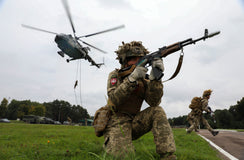
Ukraine’s Air Assault Forces – Always First!
Read MoreFrom Soviet Doctrine to Leading in the Frontline Upon the fall of the Soviet Union, several Airborne Forces of the Soviet Union were integrated into the Ukrainian Ground Forces under the name of the Ukrainian 1st Airmobile Division. For their first 20 years, they became the go-to division in Ukraine's...
-
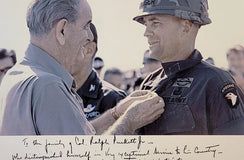
Colonel Ralph Puckett Jr.: A Tribute to Valor and Command
Read MoreColonel Ralph Puckett Jr., an exemplar of courage and command, departed this life at 97 years old, bequeathing a heritage of inspiration to countless warriors and citizens. His distinguished service record, adorned with acts of gallantry and altruism, traversed dual conflicts and a multitude of commendable deeds, meriting the top...
-
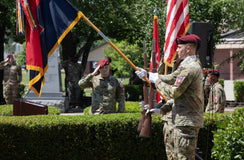
The 82nd Airborne Division Association – The Living Legacy of All-Americans
Read MoreThe 82nd Airborne Division Association – The Living Legacy of All-Americans We want to start out by stating that this is not a paid advertisement for the association nor did they entice us to write about them. As a paying member of the association ourselves, we are just a fan...
-
160th Special Operations Aviation Regiment - The Night Stalkers
Read MoreThey were born out of a doomed operation, but their role has become irreplaceable. Their brothers in arms count on them in the most difficult of times while they remain the enemy’s worst nightmare. Battle-proven, always resilient, and lethal, they are highly respected among all the services and have often...
-
Operation Hump: 173rd’s Legendary Operation in Vietnam
Read MoreSoldiers take cover in a crater during the Vietnam War (Courtesy Photo/U.S. Army) Operation Hump is a legendary operation conducted jointly by Australian and American Airborne forces in Vietnam. The Friendly composition consisted of the 1st Battalion, 503rd Infantry Regiment, 173rd Airborne Brigade, as well as a battalion from...
-
Wisdom from the Community: Top Five Pieces of Advice for New Paratroopers
Read MoreWisdom from the Community: Top Five Pieces of Advice for New Paratroopers Hear ye, hear ye! Young paratroopers, we believe you deserve some valuable advice because you are at a stage where you need it to shape your military career. Because we care, we reached out to our community to...
-
Operation Restore Democracy: The Landing that Never Happened
Read MoreOperation Restore Democracy: The Landing that Never Happened In the early 1990s, Haiti's democracy was in constant crisis, and the island was being governed by unconstitutional leadership. The regimes kept changing but lacked national and international legitimacy, leading to U.N. sanctions. The United States created a multinational force (MNF) to...
-
The Evolution of Airborne Operations: From World War II to Present Day
Read MoreThey called it "The Iron Rain." On the fateful day of June 6, 1944, as part of Operation Overlord, more than 13,000 paratroopers from the American 82nd and 101st Airborne Divisions leaped into the night sky, their hearts racing, their minds set on one goal: the liberation of Europe from...
